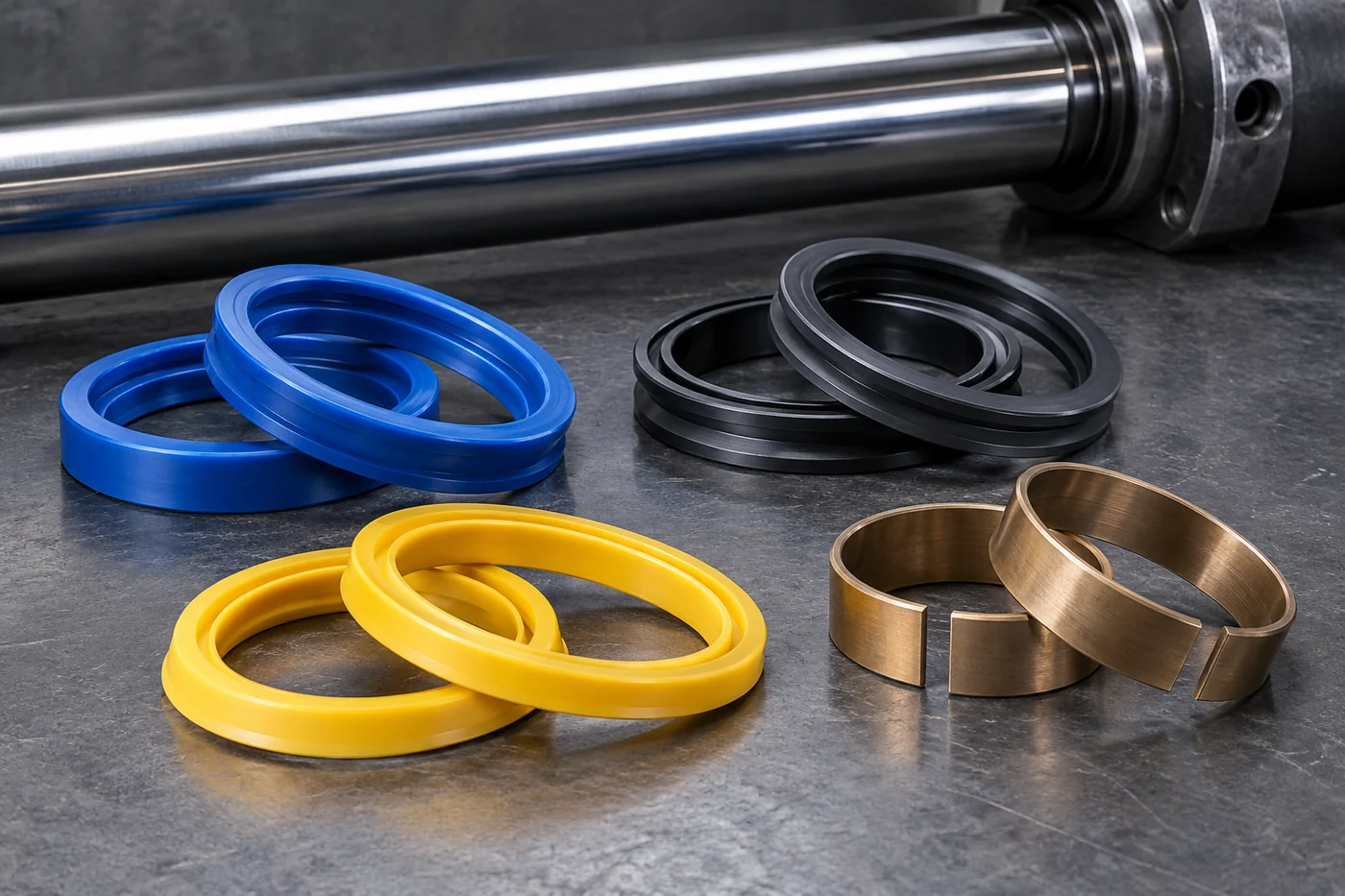
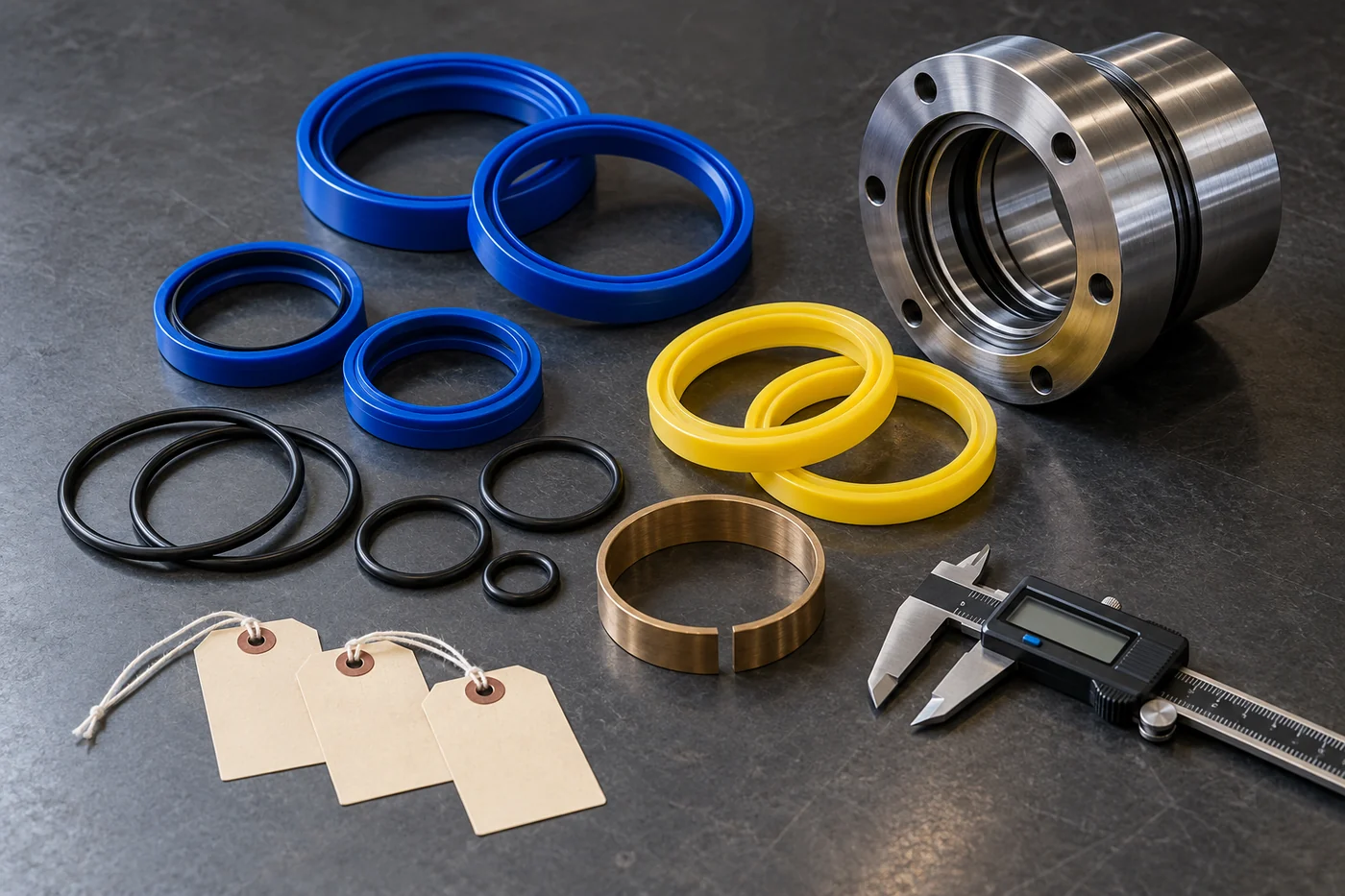
Choose a hydraulic cylinder seal kit using machine details, cylinder identity, verified part references, and a practical check of the supplied kit contents.
Order With A Clear Reference
The right seal kit starts with the fitted cylinder
Searching by machine model is a sensible starting point for a hydraulic cylinder seal kit, but it is only the beginning of the match. A machine may use different cylinders for different functions, and a production change or past repair can affect the parts fitted today. A kit should be connected to the actual cylinder being serviced, not just to a familiar machine name.
Use this planning guide to organise the search, check what is included and prepare an order that a technician can review. It applies whether you are arranging a scheduled repair or responding to a breakdown. It does not guarantee availability or identify the cause of a failure; those questions require the specific parts listing, inspection findings and supplier confirmation.
Connect machine, function and cylinder identity
Write down the full manufacturer and model, the machine serial number, and the cylinder application. Be specific about the function: a loader lift cylinder and a bucket cylinder are different enquiries even when they belong to the same machine. Add left or right position, assembly version or another qualifier when the parts breakdown uses it.
Next, find the fitted cylinder's identification. A cylinder assembly number or plate can help establish whether it matches the original machine listing. Keep photographs of the markings with the enquiry. If it is an aftermarket replacement, a rebuilt exchange unit or an assembly of uncertain origin, explain that early. Searching only by the machine's original specification can take you toward a kit that does not fit the cylinder now installed.
Three checks before treating a listing as a match
Serial range and application
Check any model suffix, serial break and cylinder function stated in the listing. Resolve a missing qualifier instead of assuming it does not matter.
Cylinder and kit references
Compare the fitted assembly number and proposed kit reference with the applicable parts information. Record supersessions and ask which reference the supplier is matching.
Dimensions and configuration
Where needed, use the rod, bore, groove and original component evidence to resolve an uncertain match. Similar machine names or seal photographs are not sufficient confirmation.
Use measurements to resolve uncertainty
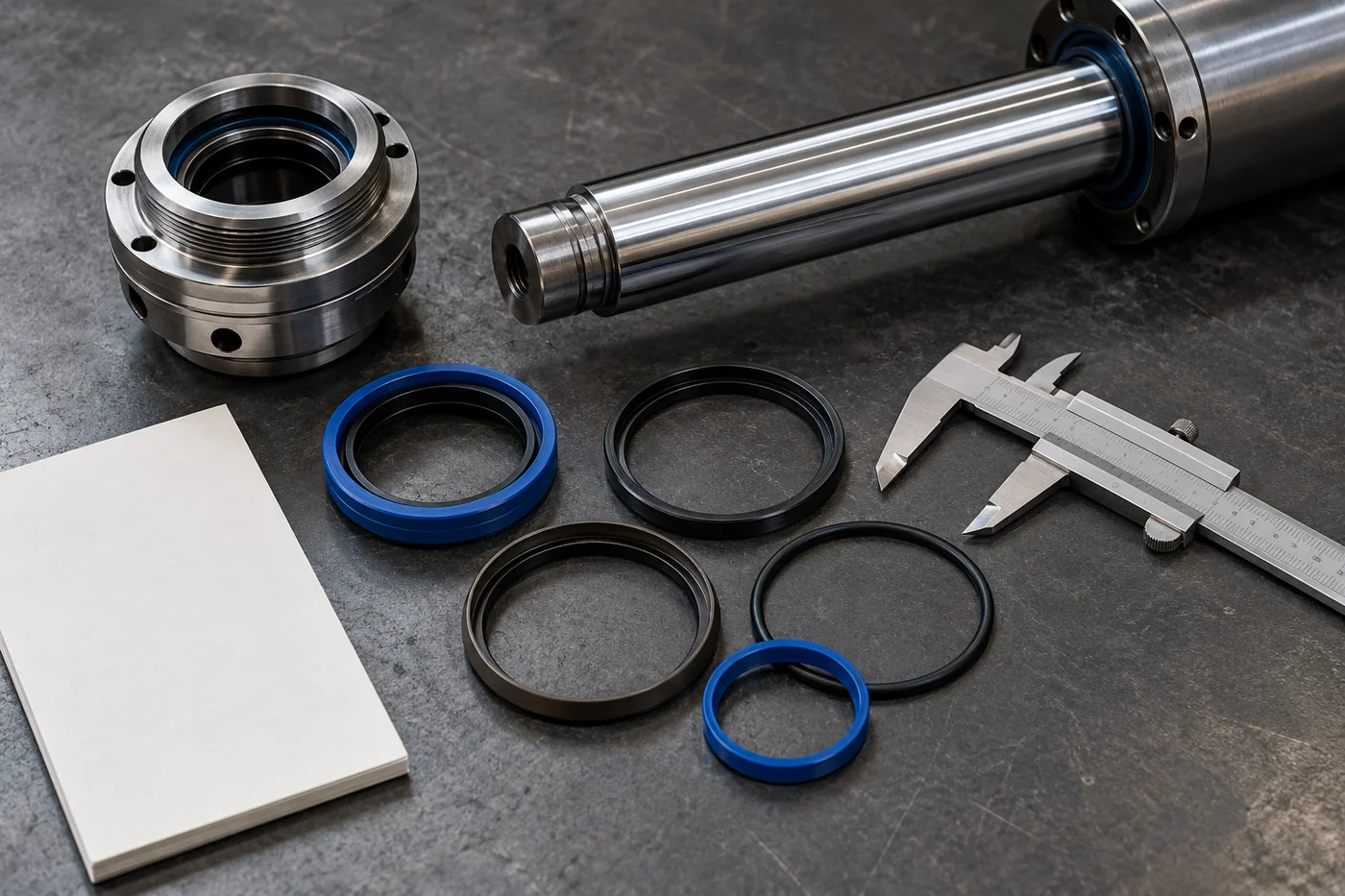
If the identification is incomplete, organise the dimensional evidence before requesting an alternative. Provide units, distinguish measured values from catalogue sizes and describe where each measurement was taken. Include useful photographs of original profiles and their positions. Explain any visible distortion or wear on the old components.
A supplier may need information from the cylinder and grooves rather than dimensions taken only from a used seal. Have a qualified technician collect those details through the approved service process. Do not select the nearest apparent size to keep the repair moving. The relevant product drawing and cylinder specification should establish whether a candidate fits; rounding a measurement until it resembles a familiar nominal size removes information the identification process needs.
Check the kit contents before booking assembly
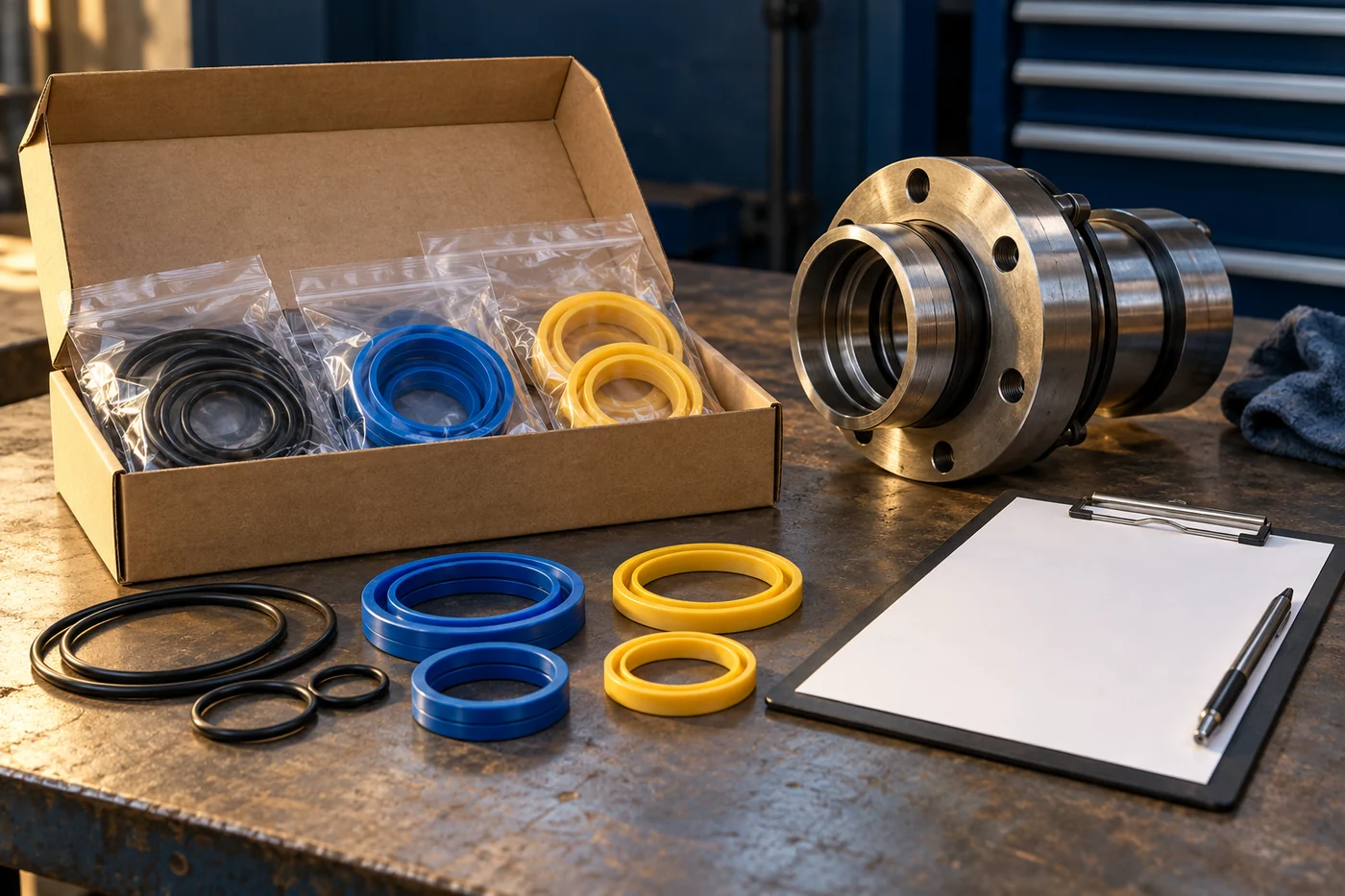
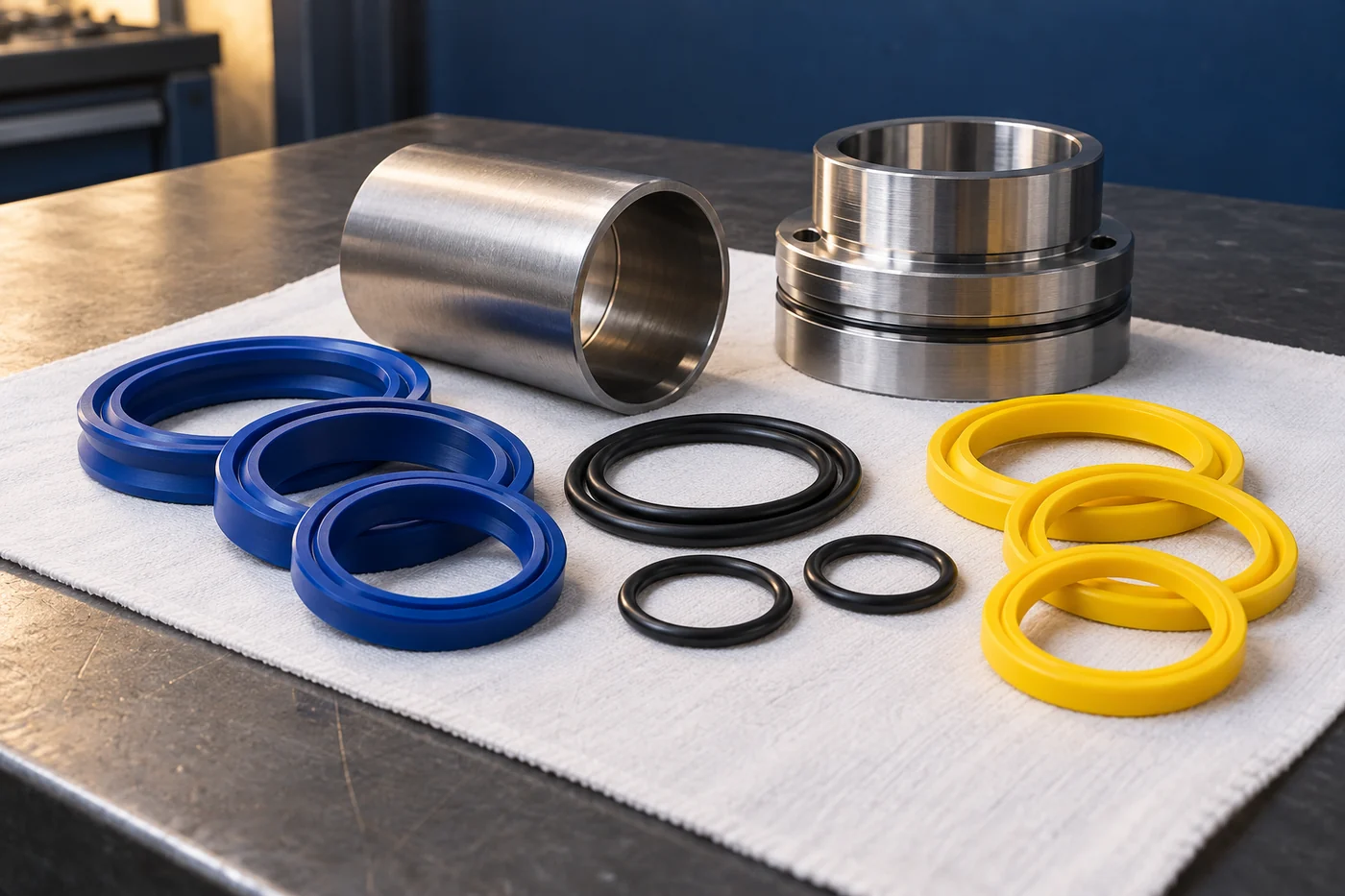
A seal kit is a defined collection of parts, not a promise that every serviceable item in a cylinder is included. Ask for a contents list or an applicable diagram. Confirm which rod, piston and static seals are supplied, and whether wipers, backup rings, energisers or guide elements are part of that specific kit. Do not assume two kits with similar descriptions contain the same components.
Compare the supplied set against the documented cylinder arrangement before assembly begins. Investigate unexplained differences, damaged packaging or missing items while the references are still available. A changed part may reflect a documented supersession, but it may also indicate a mismatch. Keep the original kit packaging and order reference until the match is resolved, and avoid mixing loose components from several kits into one unlabelled set.
Plan for the condition of the cylinder, not only the kit
A replacement kit does not establish that the rod, bore, gland and supporting components are ready for reuse. Ask the technician to inspect the relevant surfaces and guides and to document conditions that could affect the repair. Resolve those findings before reassembly, using the equipment maker's service requirements.
Allow time to confirm uncertain parts rather than discovering the problem after the cylinder is needed back in service. Record the accepted kit reference, the cylinder identity and the installation date in the machine's service history. That record gives the next repair a better starting point and helps distinguish a verified previous match from an unrelated box found on the shelf. Follow the approved isolation, support and pressure-release procedure whenever servicing hydraulic equipment.
Questions to settle before placing the order
Is an OEM cross-reference enough? Treat it as a traceable reference to verify against the actual cylinder and the listing's qualifiers. Ask whether a superseded number or version change affects the match.
Can I choose a different seal material? Only after the relevant fluid compatibility and application requirements have been checked. A familiar colour or a claim of higher performance does not establish suitability for this cylinder.
What should I send if I need help? Provide the machine model and serial number, cylinder application and assembly reference, previous verified kit number, photographs, and any requested measurements. State which details are unknown.
When should I check stock and timing? After identifying a candidate, confirm availability and the specific supplied contents with the seller before arranging downtime around the order. A catalogue listing by itself is not a delivery commitment.
Start with your equipment catalogue
Bobcat seal kit catalogue
Navigate to the machine type and application, then check the model and cylinder references for the required repair.
Genie seal kit catalogue
Use the equipment hierarchy to narrow the search; confirm the cylinder fitted to your machine.
Kubota seal kit catalogue
Gather model and serial information before comparing the relevant cylinder application.
Case seal kit catalogue
Check the application and any stated model or serial qualifiers before treating a listing as a match.
Useful manufacturer resources
Parker seal kit identifier
A manufacturer-specific identifier for supported actuator brands. Use it for applicable Parker-group cylinders, not as a universal equipment lookup.
Trelleborg catalogues and brochures
Consult the applicable seal documentation when a component-level specification or drawing needs checking.
Put your knowledge to work
Find the seal. Plan the repair.
Share the part number, machine details, seal dimensions, and clear photos with Hydraulic Seal Depot. Our team can help narrow down the right parts for your application.
Build your seal knowledge