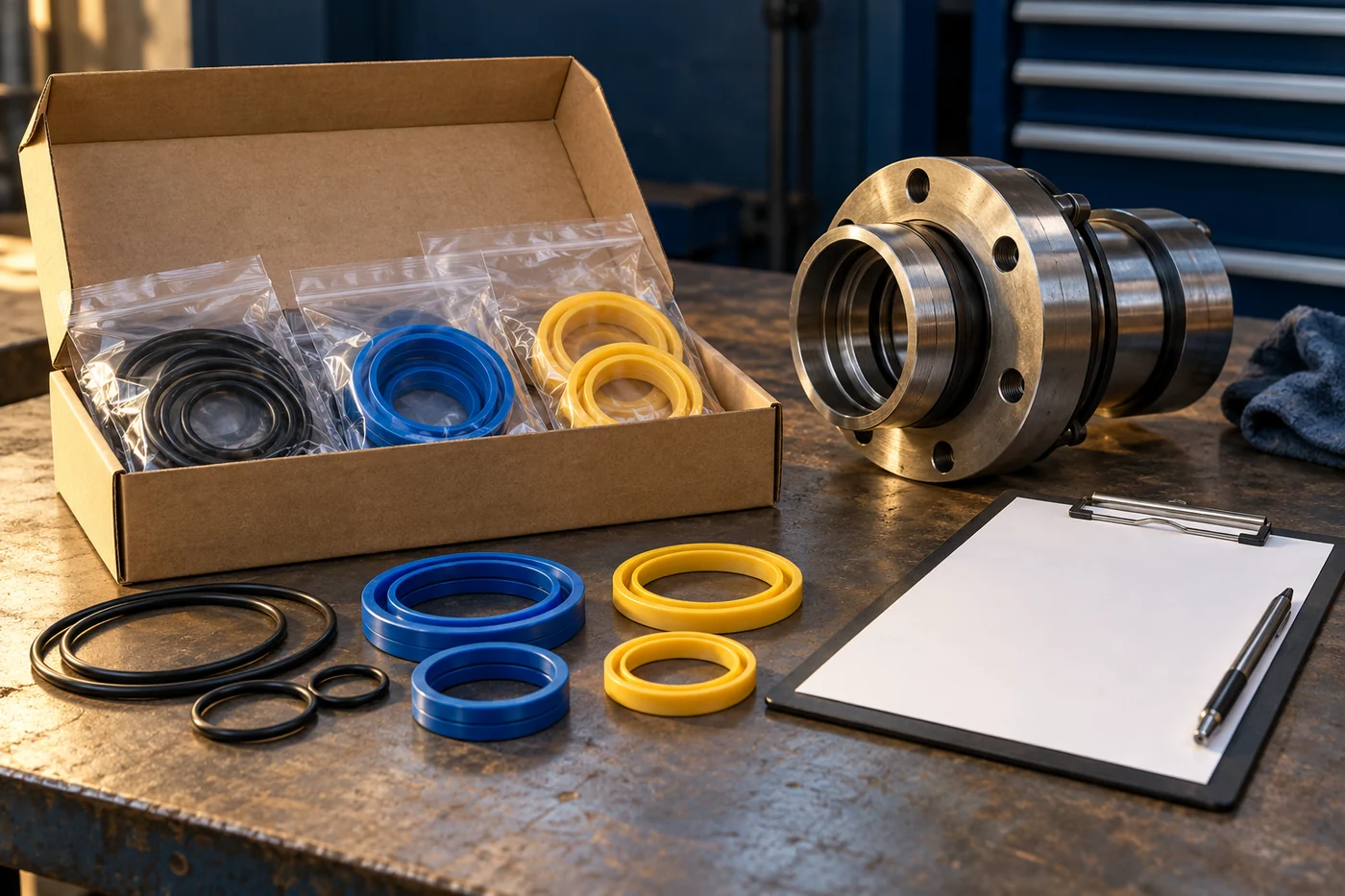
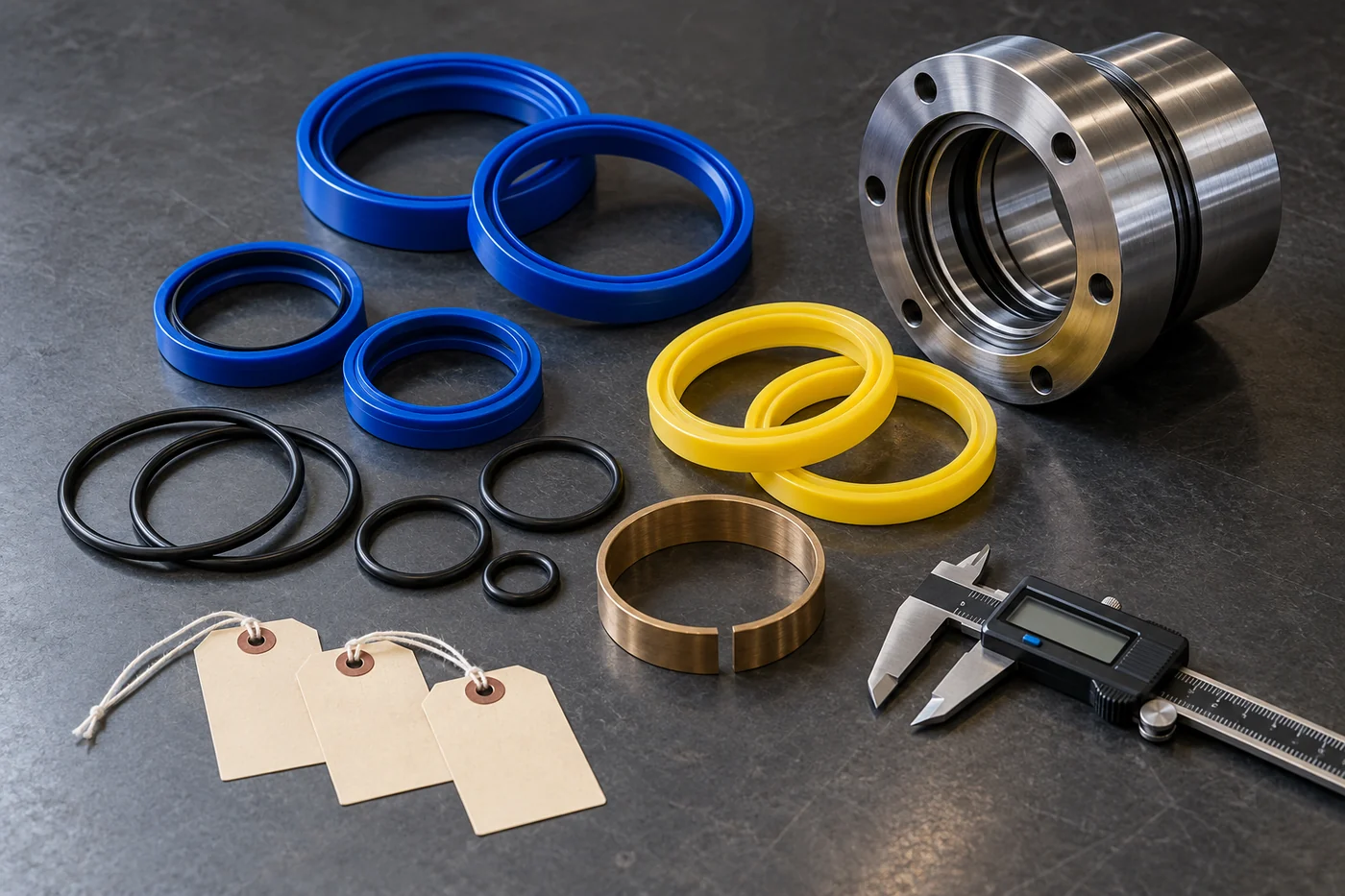
Understand rod seals, piston seals, wipers and guide rings, then use cylinder identity and manufacturer specifications to choose the right replacement.
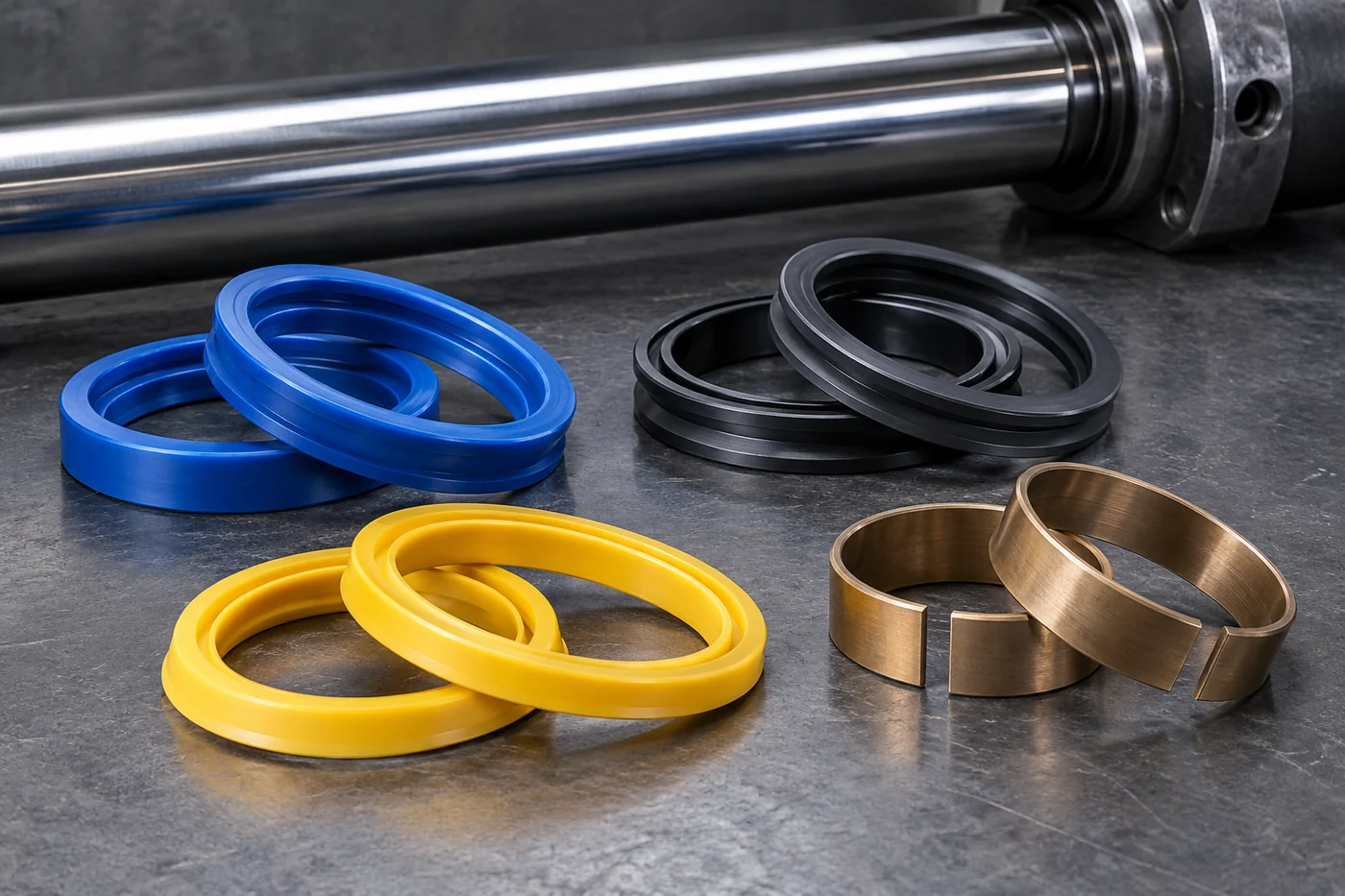
Know The Position
One cylinder contains several different sealing jobs
When someone asks for a hydraulic cylinder seal, the first useful question is: which position? A rod seal, piston seal, wiper and guide ring can all come out of the same cylinder, yet each contributes a different function. Treating them as interchangeable rings makes identification harder and can hide what a replacement kit actually contains.
This guide explains the roles in a typical hydraulic cylinder so you can describe parts accurately and prepare a clearer enquiry. Actual arrangements vary. Use the cylinder maker's parts breakdown and the selected seal manufacturer's drawing to confirm the components fitted to your assembly. The illustrations provide context rather than a dimensioned assembly drawing or an installation instruction.
Rod seals and piston seals work at different interfaces
The rod seal works at the moving rod where it passes through the cylinder head or gland. The piston seal works between the piston and cylinder bore. Those locations call for different identification details even when the removed parts look similar on the bench. Manufacturers offer different profiles for different cylinder arrangements, including single-acting and double-acting piston applications.
For an enquiry, name the position rather than relying on a general label such as rubber ring. Add the rod or bore reference, groove information, profile photographs and the cylinder part number. A catalogue result should agree with that evidence. Do not assume a U-shaped cross-section establishes that a seal is suitable for every rod or piston application; the specific product design and manufacturer guidance determine its use.
Three supporting components worth identifying separately
Wiper or scraper
Usually located at the rod entry, a wiper helps exclude external dirt and moisture. Its seating arrangement and profile still need confirmation.
Wear ring or bearing
A guide element supports alignment of moving parts. Include it in inspection and contents checks rather than assuming it is a pressure seal.
Static seal and backup ring
Static joints and supporting rings have their own positions and specifications. Keep associated components together when documenting the original arrangement.
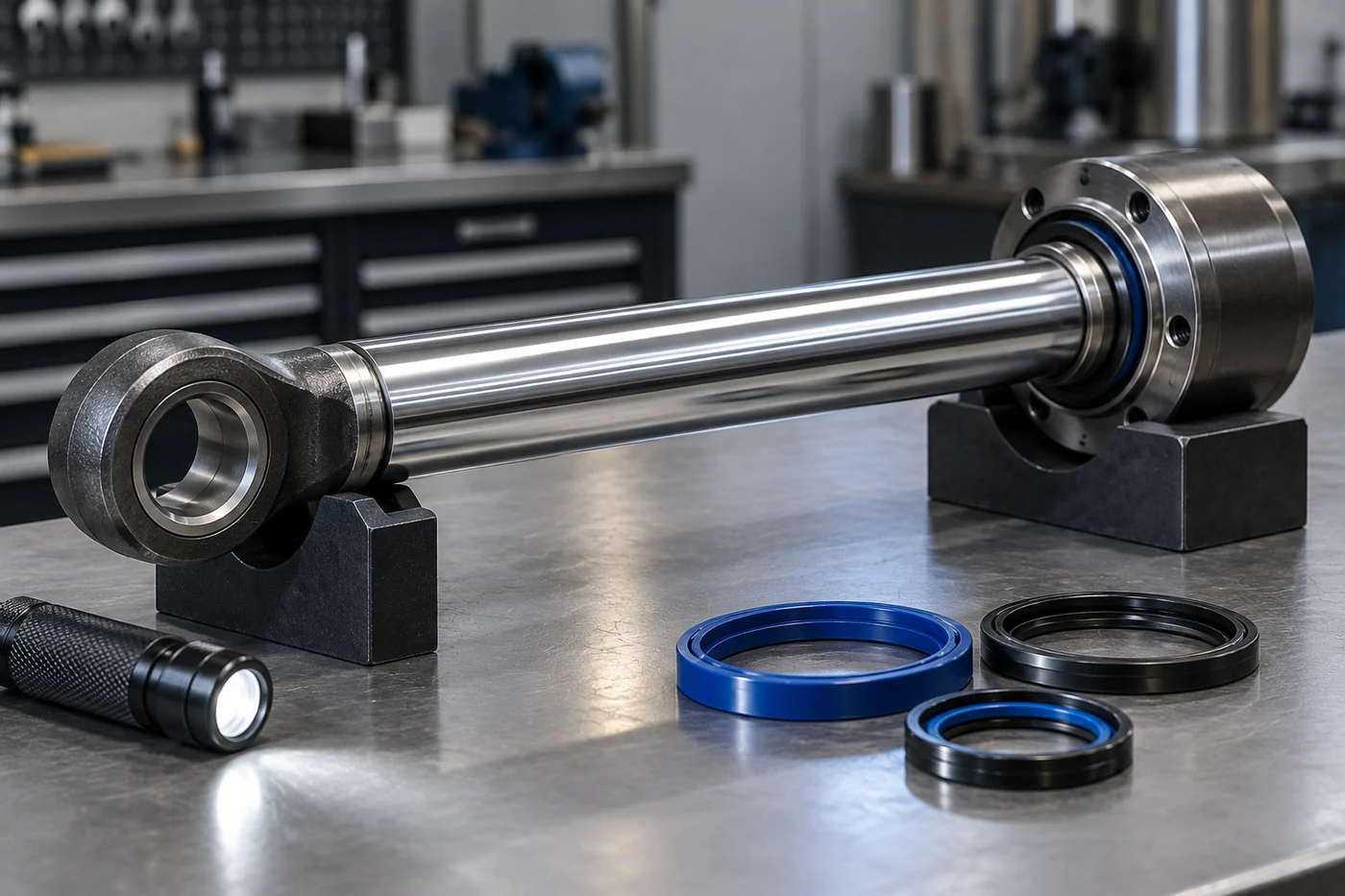
The rod-entry area deserves a closer look
A cylinder working around soil, road grit or workshop debris depends on more than an internal pressure seal. The rod-entry arrangement also includes elements intended to limit contamination entering with rod movement. A worn or damaged wiper should therefore be recorded alongside the condition of the exposed rod and surrounding gland.
Do not choose a replacement solely because it fits the visible recess. Record the original profile, any retaining features and the cylinder reference. Some arrangements contain multiple sealing and supporting elements close together. An isolated photograph can blur the distinction between the outer wiper and a seal located farther inside. A labelled view of the gland and the maker's parts diagram makes that distinction much easier to communicate.
Confirm the whole arrangement before changing one component
Selecting a replacement involves more than matching a family name. The groove, mating surfaces, fluid, operating conditions and neighbouring components all belong in the application review. Materials and profiles that suit one documented arrangement may be inappropriate in another. Avoid treating a different compound, extra lip or visually heavier section as an automatic improvement.
Ask whether the replacement is intended for the original design and whether associated elements must be replaced or inspected at the same time. Obtain the relevant product drawing and installation guidance. There is no universal seal orientation, pressure rating or temperature limit that covers all cylinder seal designs. Where the reference information is incomplete, stop the substitution decision and gather the missing detail rather than improvising around an attractive catalogue match.
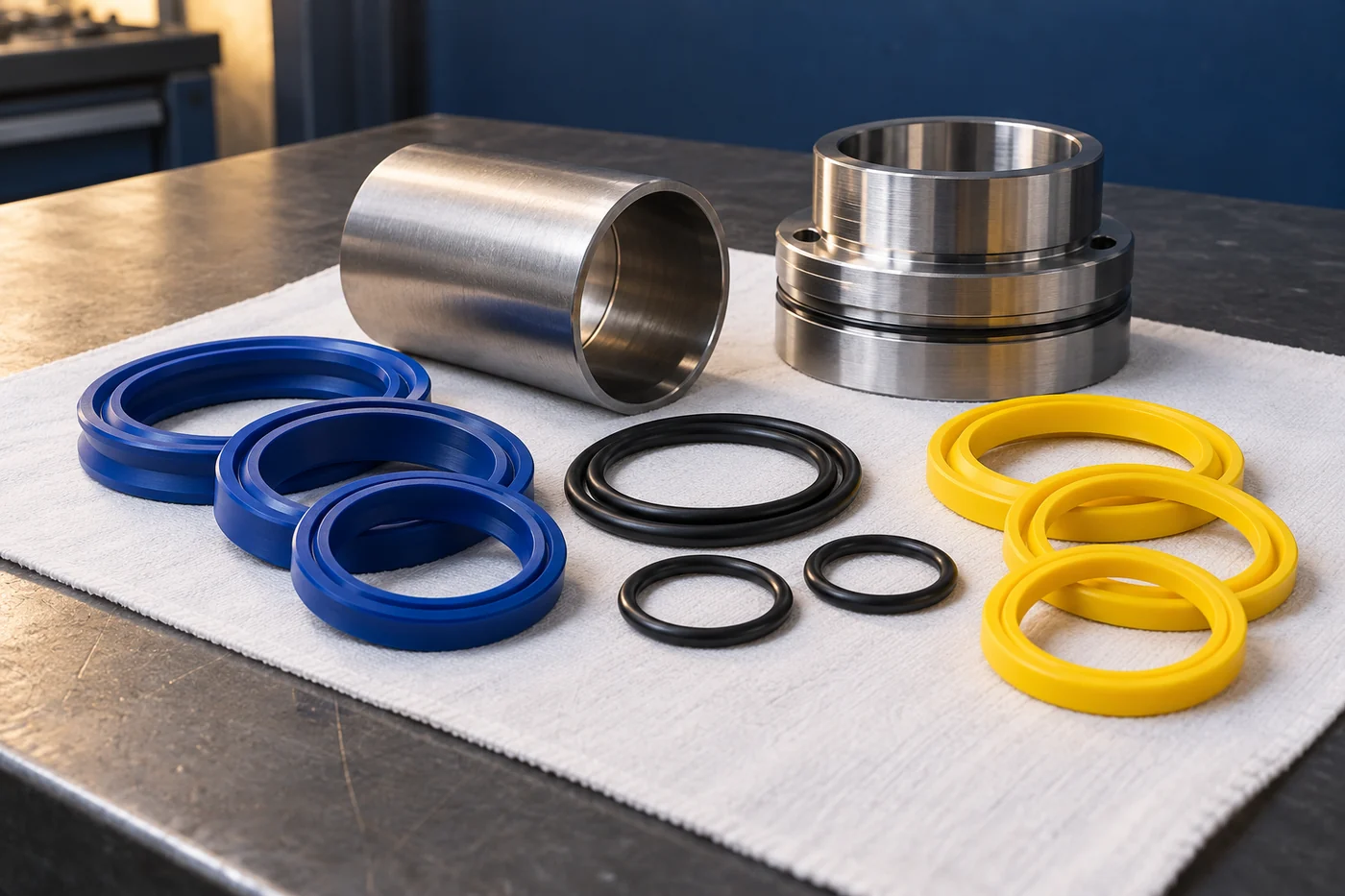
Make the parts layout work for the repair
Before parts are mixed together, create a position-by-position record. Give each location a label and connect its seal, supporting elements, photographs and measurements to that label. Keep the parts breakdown beside the inventory so a missing energiser or backup ring is visible before the job reaches assembly.
Cleanliness and inspection matter, but this article does not replace a service manual. A qualified technician should follow the equipment maker's procedure for safe disassembly, inspection and reassembly. Record any component that differs from the parts diagram, and resolve that difference before assuming the supplied kit is wrong. Previous repairs or replacement cylinder assemblies can leave a machine with a configuration that differs from an early catalogue entry.
What symptoms can tell you, and what they cannot
Does oil on the rod prove that the rod seal alone has failed? It identifies an observation to investigate, not a complete cause. Record where the oil appears, the operating circumstances and the inspected condition of the components. Let a technician assess the cylinder and system before narrowing the repair to one part.
Does cylinder drift prove the piston seal needs replacing? Drift can prompt further checks, but the observation alone does not isolate one seal or exclude other system causes. Use the manufacturer's diagnostic procedure.
Should every component from a seal kit look like the parts removed? Compare the contents with the applicable parts breakdown. A documented supersession may change appearance, while a missing item or an unexplained mismatch needs clarification. Keep the kit identification and supplier information available so the answer can be checked against the actual application.
Browse with the seal position in mind
Hydraulic seal catalogue
Begin with the family you have identified, then verify dimensions, profile and material for the particular cylinder.
Rod seal listings
Explore the rod seal category when that position has been confirmed. The category name alone does not confirm fit.
U-seal listings
Compare a U-seal only against the applicable product drawing and cylinder specification.
Further reading from seal manufacturers
Hallite cylinder seal families
Manufacturer descriptions of rod, piston and guide components provide a useful vocabulary for an enquiry.
Hallite wipers
Read the manufacturer overview of contamination exclusion at the rod entry.
Trelleborg hydraulic seals
Explore manufacturer sealing-system resources and follow the applicable product documentation.
Put your knowledge to work
Find the seal. Plan the repair.
Share the part number, machine details, seal dimensions, and clear photos with Hydraulic Seal Depot. Our team can help narrow down the right parts for your application.
Build your seal knowledge