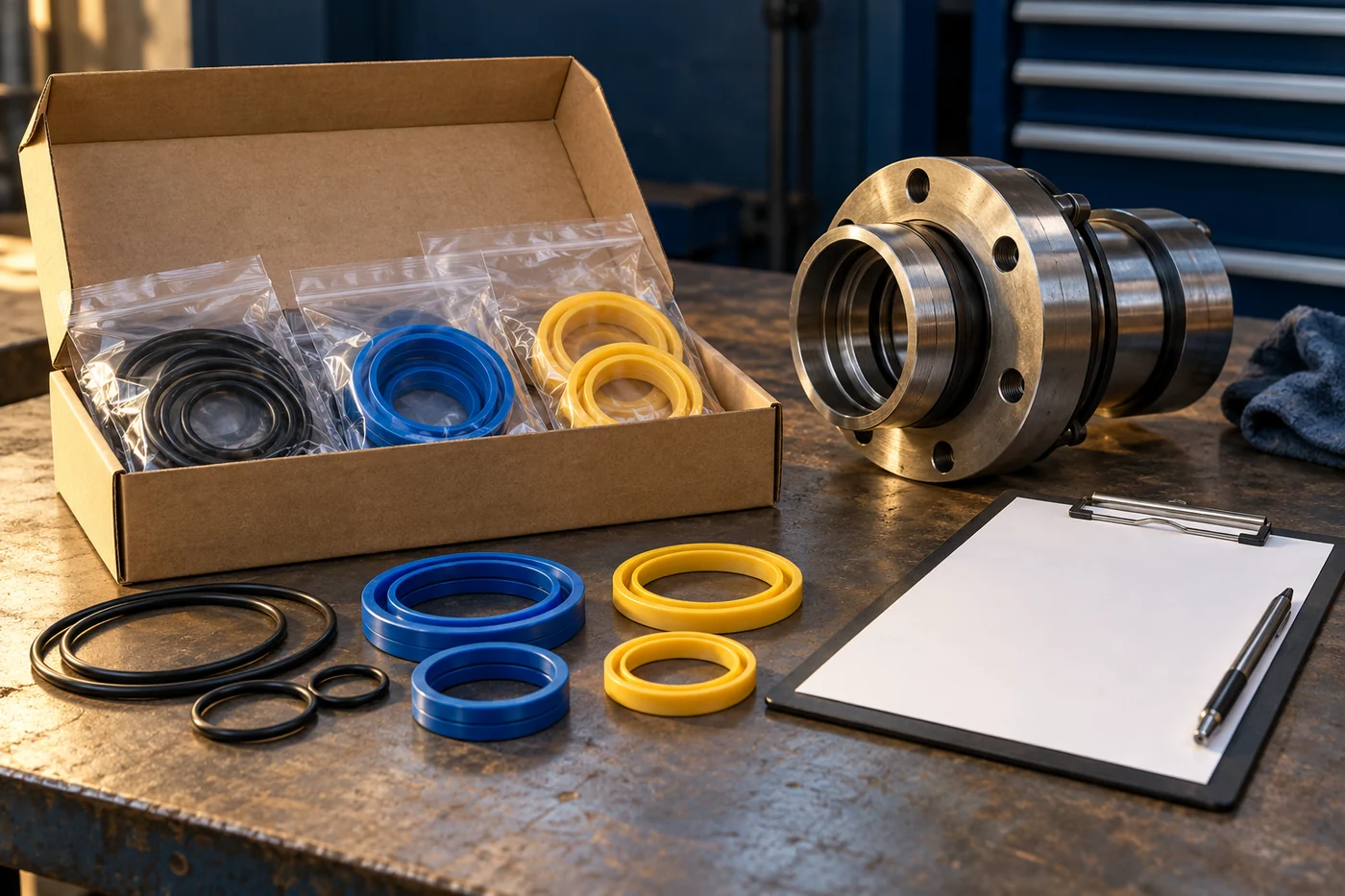
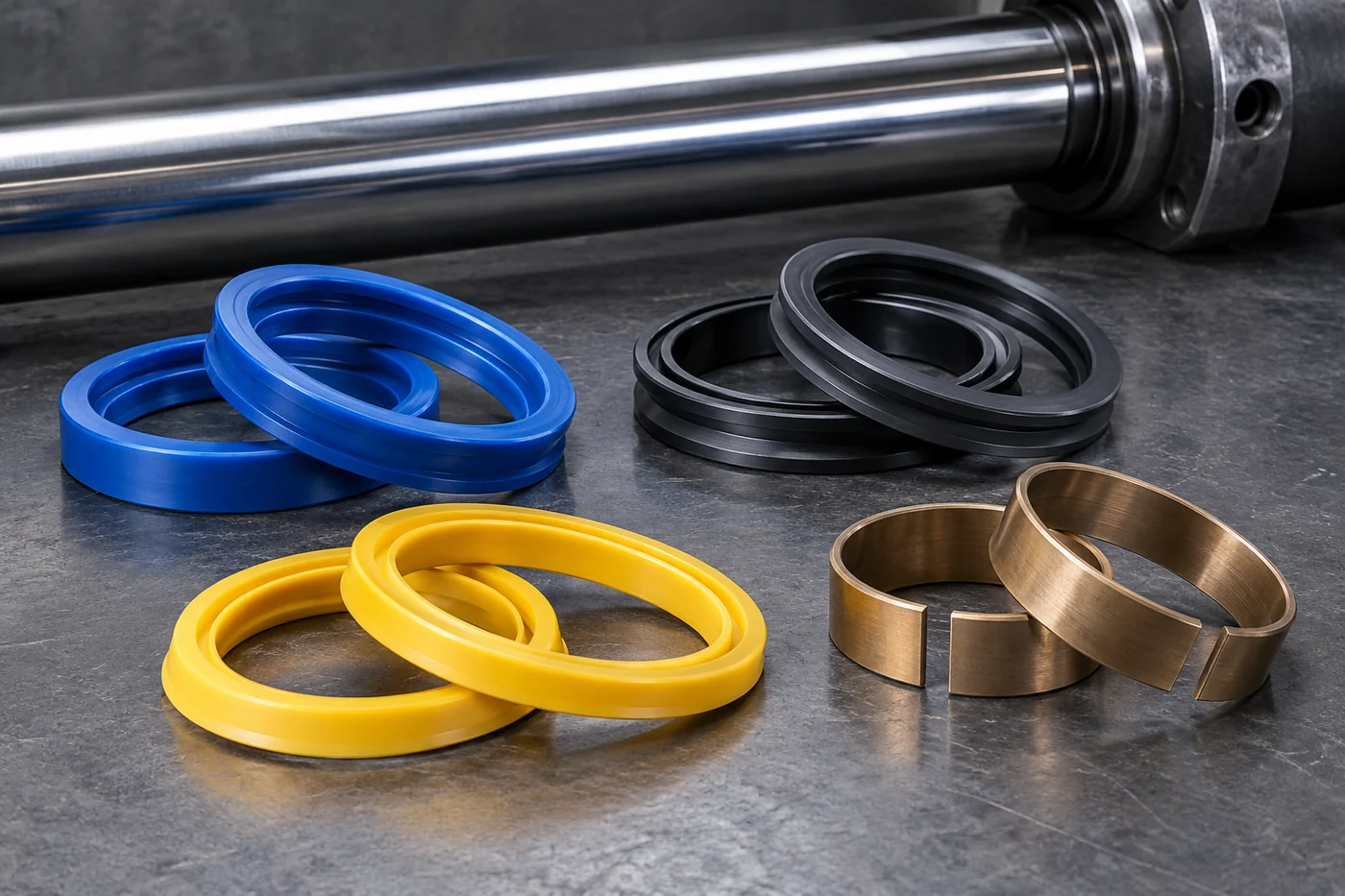
Identify hydraulic cylinder seals with a practical checklist for seal profiles, rod and bore measurements, material questions, and replacement enquiries.
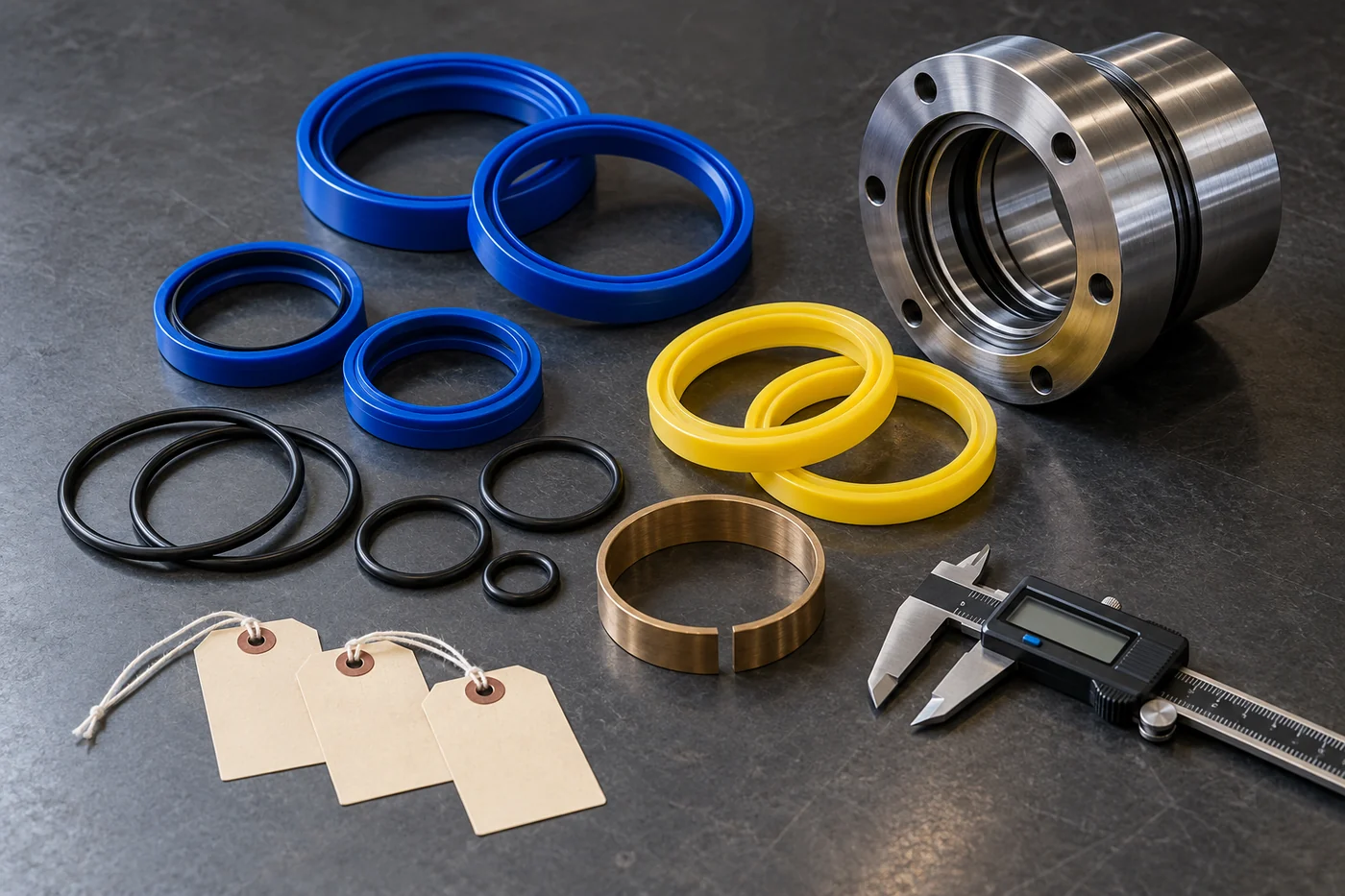
Identify Before You Order
Start with the cylinder, then identify the seal
A hydraulic seal that looks close can still be the wrong replacement. Two rings can share a nominal diameter while differing in profile, groove fit, material, or the job they perform. The quickest route to a useful match is a small set of reliable facts: the cylinder identity, each seal's position, the relevant dimensions, and the conditions it must handle.
This guide helps you organise that evidence before searching or requesting help. It is an identification workflow, rather than a cylinder repair procedure. Any disassembly should follow the equipment maker's isolation, support, depressurisation and service instructions. A qualified technician should resolve uncertain cylinder condition or assembly details before a replacement is selected.
Record the details that can narrow the search
Start with the equipment manufacturer, complete model designation and serial number. Add the cylinder's application: boom, bucket, lift, steering, stabiliser or another function. A single machine may carry several different cylinders, and a model name does not establish that every production year uses the same seal kit.
Look for a cylinder assembly number, identification plate, casting reference or a service record that connects the fitted cylinder to an approved parts listing. Photograph markings before cleaning obscures them. Record previous kit numbers as clues, but distinguish a verified service reference from an old handwritten note. If the cylinder has been replaced or modified, say so. Its current identity may matter more than the machine's original build specification.
Keep every seal connected to its original position
Photograph the assembly
Take an overall view before close-ups. A photograph showing where a seal belongs often explains more than an isolated ring lying flat.
Label the positions
Keep gland, piston and static joint components separate. Mark the original sequence and retain a matching note for each groove.
Keep the full set
Retain backup rings, energisers and guide elements with their associated seals. A multi-part arrangement can be misidentified when only its outer ring is supplied.
Measure the mating parts as well as the removed seal
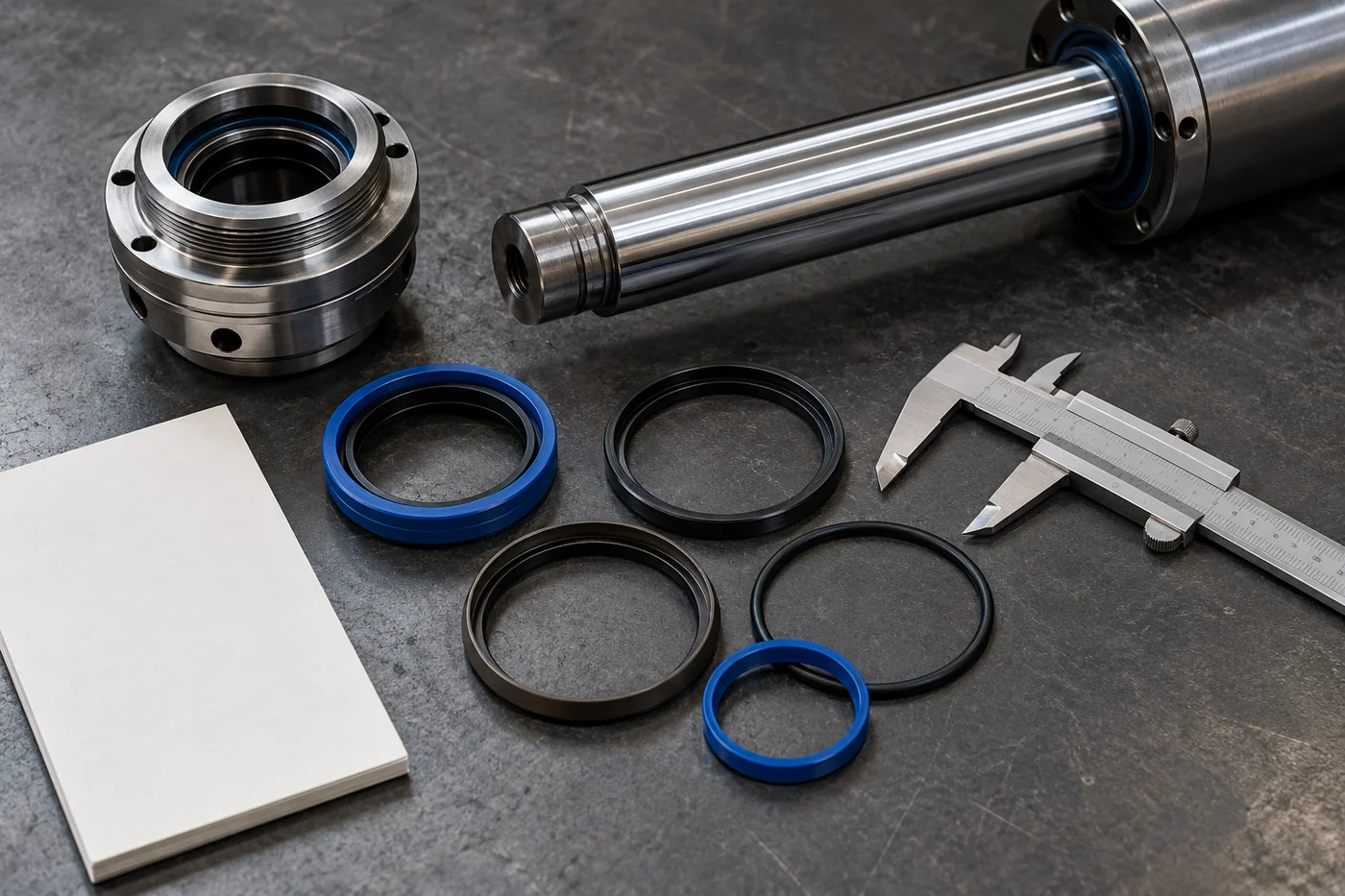
A used seal is evidence, but it is not always an accurate dimensional reference. Wear, stretching, compression and damage can change its shape. Where accessible through the approved service procedure, record the rod diameter, cylinder bore and the dimensions of the groove that carries the component. For a static ring, include the relevant cross-section and seating arrangement.
Use suitable measuring equipment and write down the units with every value. Distinguish an actual measurement from a nominal catalogue size. Measure consistently at more than one location when condition permits, and note visible wear rather than averaging away a discrepancy. Do not round a reading to the nearest familiar inch or metric size just to make a catalogue result fit. Supplier drawings should confirm the final dimensional match.
Match the profile and material specification
Describe the cross-section, lip arrangement and any separate energiser or backup element. Note whether a rigid case is present and whether the component sits in a rod, piston or static location. Provide clear photographs from the side and above, ideally beside a scale, while preserving a record of its installed position.
Colour alone cannot establish material or performance. Tell the supplier the hydraulic fluid specification, known operating conditions and any documented material requirement. If those details are unavailable, label them as unknown. A seal made from a different compound is not automatically an upgrade, even when its dimensions appear identical. Confirm profile, material compatibility and the manufacturer's application limits together instead of treating each as an independent shopping filter.
Record wear without guessing the whole failure story
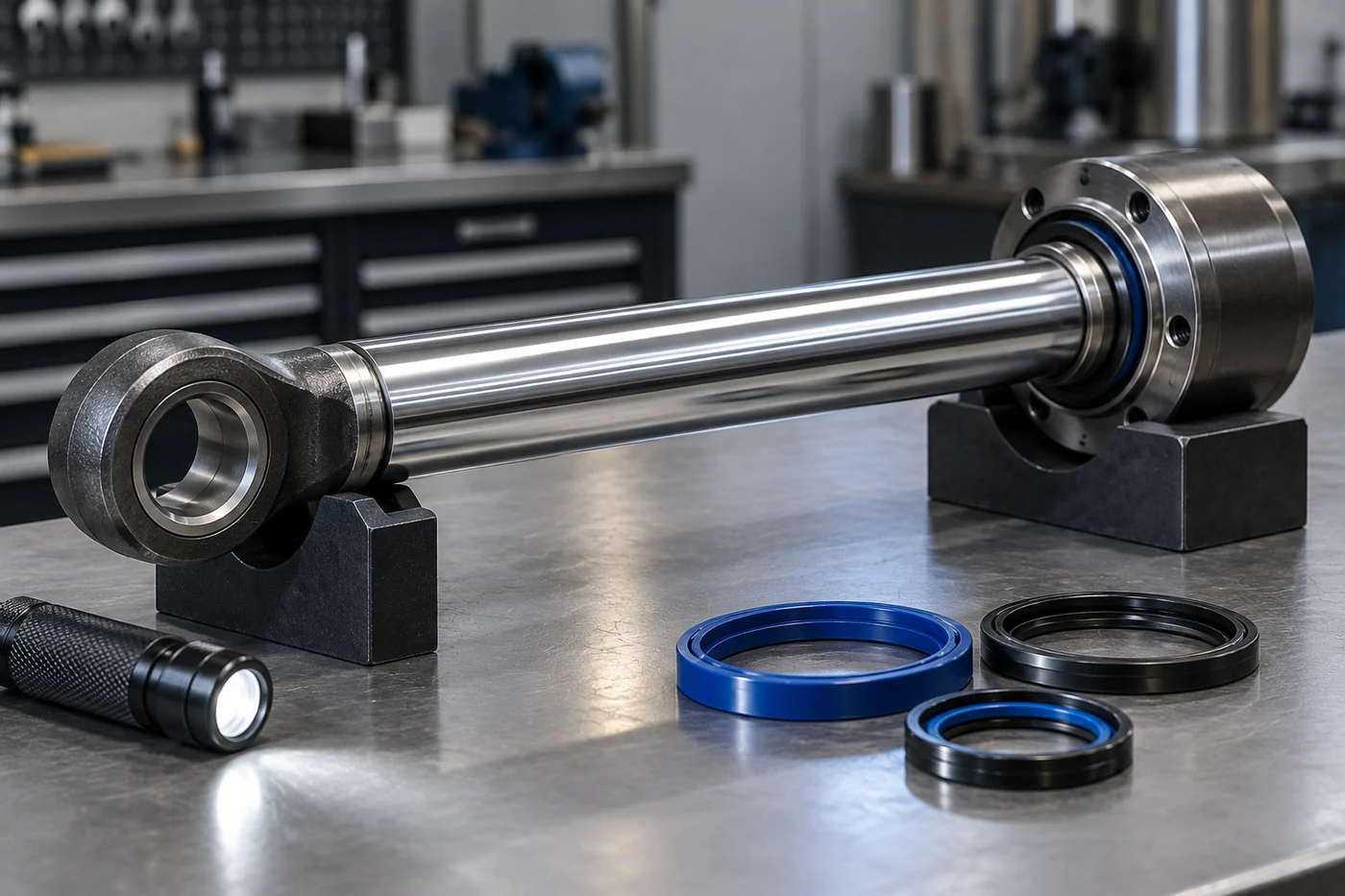
Photograph damaged lips, unusual wear, debris and visible marks on mating surfaces. Ask the technician to record the condition of the rod, bore, grooves and guide elements while the cylinder is available for inspection. These observations can help a supplier ask better questions; they do not prove a single failure cause.
Replacing a leaking seal alone may leave the underlying issue unresolved. A damaged surface, contamination, incorrect assembly or another system condition can affect the replacement. Keep diagnosis and repair decisions tied to inspection and the equipment documentation. Use the actual cylinder, retained components and approved dimensional drawings as the evidence for ordering.
Common identification questions
Can I order from a photograph? Photographs help identify likely families and missing details. They should be paired with measurements and a cylinder reference wherever possible. A visual resemblance alone does not confirm groove fit or material.
Can I measure only the old seal? Supply those measurements if they are all you have, but state that they came from a used component. Explain whether it is stretched, split or distorted, and ask what additional reference measurements are needed.
What if I cannot find a part number? Build a labelled evidence pack: machine and cylinder details, original seal locations, photographs, measured dimensions with units, and known fluid information. Send it together so the identification discussion can address the missing facts in one exchange.
Turn your identification notes into a better enquiry
Browse hydraulic seals
Use the hydraulic seals catalogue as a starting point after identifying the component family. Confirm the individual listing before ordering.
Explore rod seals
If the component seals around a moving rod, compare rod seal listings against your confirmed profile and measurements.
Send your evidence pack
Include your reference numbers, labelled photographs, dimensions and units. Ask for confirmation where the identification remains incomplete.
Manufacturer references for further checking
Hallite hydraulic seal families
Manufacturer overview for distinguishing cylinder seal families; not a dimensional approval for a replacement.
Trelleborg technical literature
Use the applicable product catalogue and drawing to verify a specific profile and its application requirements.
Put your knowledge to work
Find the seal. Plan the repair.
Share the part number, machine details, seal dimensions, and clear photos with Hydraulic Seal Depot. Our team can help narrow down the right parts for your application.
Build your seal knowledge